
Watercress (Acmella oleracea / Spilanthes oleracea)
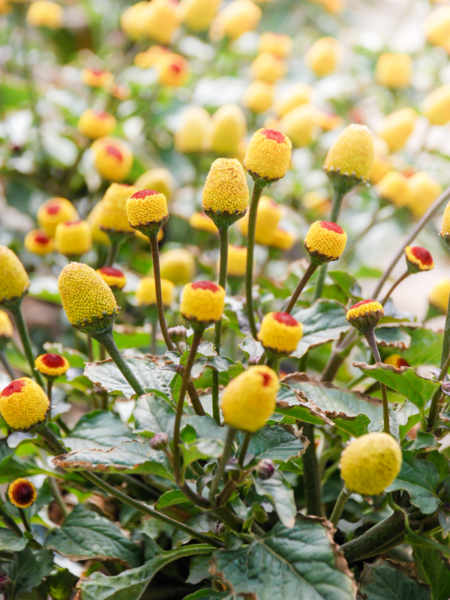
The paracress, also known as jambú in its native South America, is – contrary to what its German name might suggest – a member of the Asteraceae family. It is an ancient cultivated plant, believed to have been originally bred in Peru from Acmella alba. Here, the plant, with its egg-shaped yellow-red inflorescences, is also used as an ornamental plant.
Whilst the cooked leaves of paracress are used in Brazil as a vegetable in a variety of traditional dishes, Latin American folk medicine employs the flowers and leaves to treat various ailments, including rheumatism, gout, asthma and gum inflammation. In England, paracress has been given the name ‘toothache plant’.
When the aromatic leaves of the paracress are eaten, one feels a tingling sensation on the tongue similar to that of effervescent powder, and salivation is stimulated. For a short time, there is also a slightly numbing sensation.
The key active ingredients in the plant’s leaves and flowers include, alongside spilanthol and spilanthen, essential oils, phytosterol and pungent compounds. Paracress has a wide range of therapeutic potential. According to studies, it has analgesic, local anaesthetic, antipyretic, anti-inflammatory, antimicrobial, cell-protective and immunostimulant effects, amongst others. Furthermore, Acmella has nerve-cell-protective and vasodilatory properties.
Parakresse extracts are used externally, primarily for therapeutic purposes to treat aching joints and muscles, and, due to their muscle-relaxing effect, in anti-ageing products within the cosmetics industry.